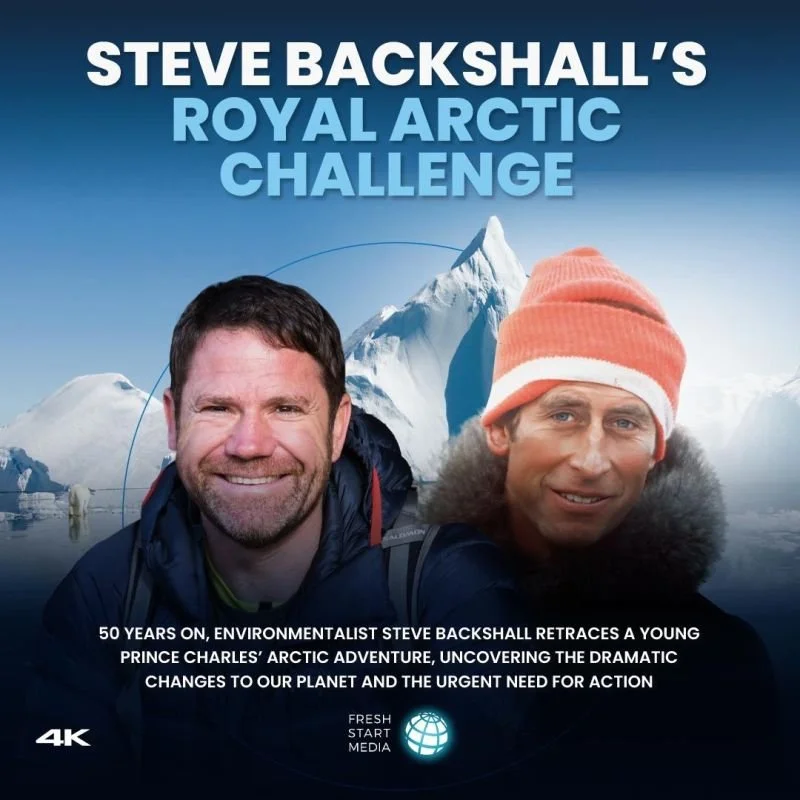
A Royal Dive Beneath The Ice With Steve Backshall
In April of 2025 I was privileged to have the opportunity to dive for Arctic Kingdom Expeditions with an icon in the documentary world, Steve Backshall. Steve is a renowned expedition focused presenter and naturalist in the UK. I have followed Steve’s work for many years, exploring the furthest reaches of our planet. On this project, our objective was to retrace the footsteps and dives King Charles did beneath the ice during an arctic visit in the 1970’s. The Inuit people of Qikiqtarjuaq embraced Steve and our production crew as if we were their own. When we arrived at the small airport in Qikiqtarjuaq, snowmobiles and trucks awaited to take us to the Tulungak Hotel which would become our basecamp for the production.
My entire dive career has been focused around challenging cold water diving in Canada so where most people might be scared to embark on this expedition, I was thrilled. To dive and film under the sea ice requires a high level of confidence and preparation. The circumstances of remote productions like this do not always allow for every little thing to go just as you hoped it would. As an example, Serge Cormier and I had a 3 day journey to Qik which actually became 7 days with flight delays in Iqaluit due to weather and mechanical issues with the Canadian North airline. This alone compressed our production timeline for the dive unit into a mere 48 hour dive window on the ground. From the moment our plane landed in Qik, the preparation for the first dives were full tilt.
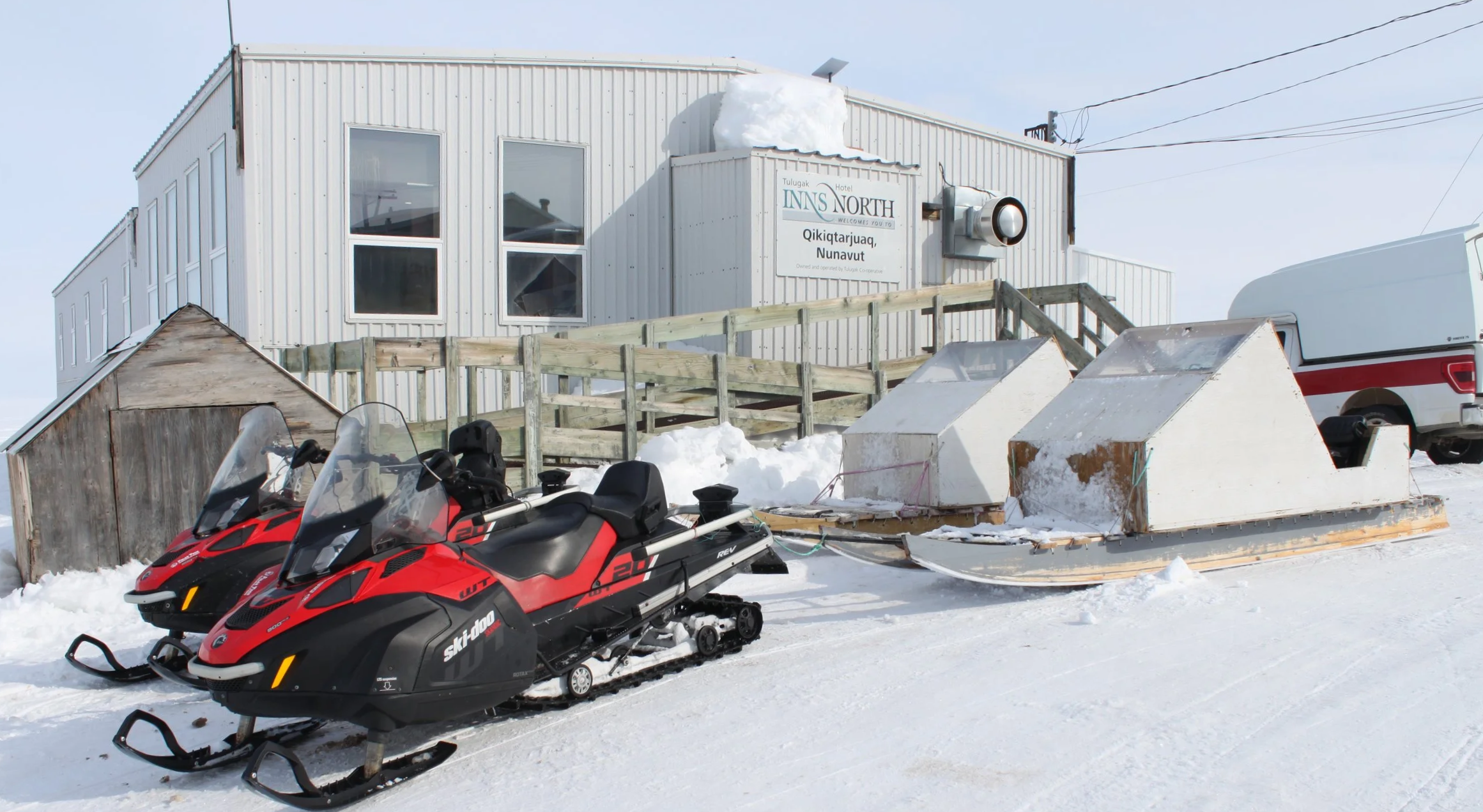
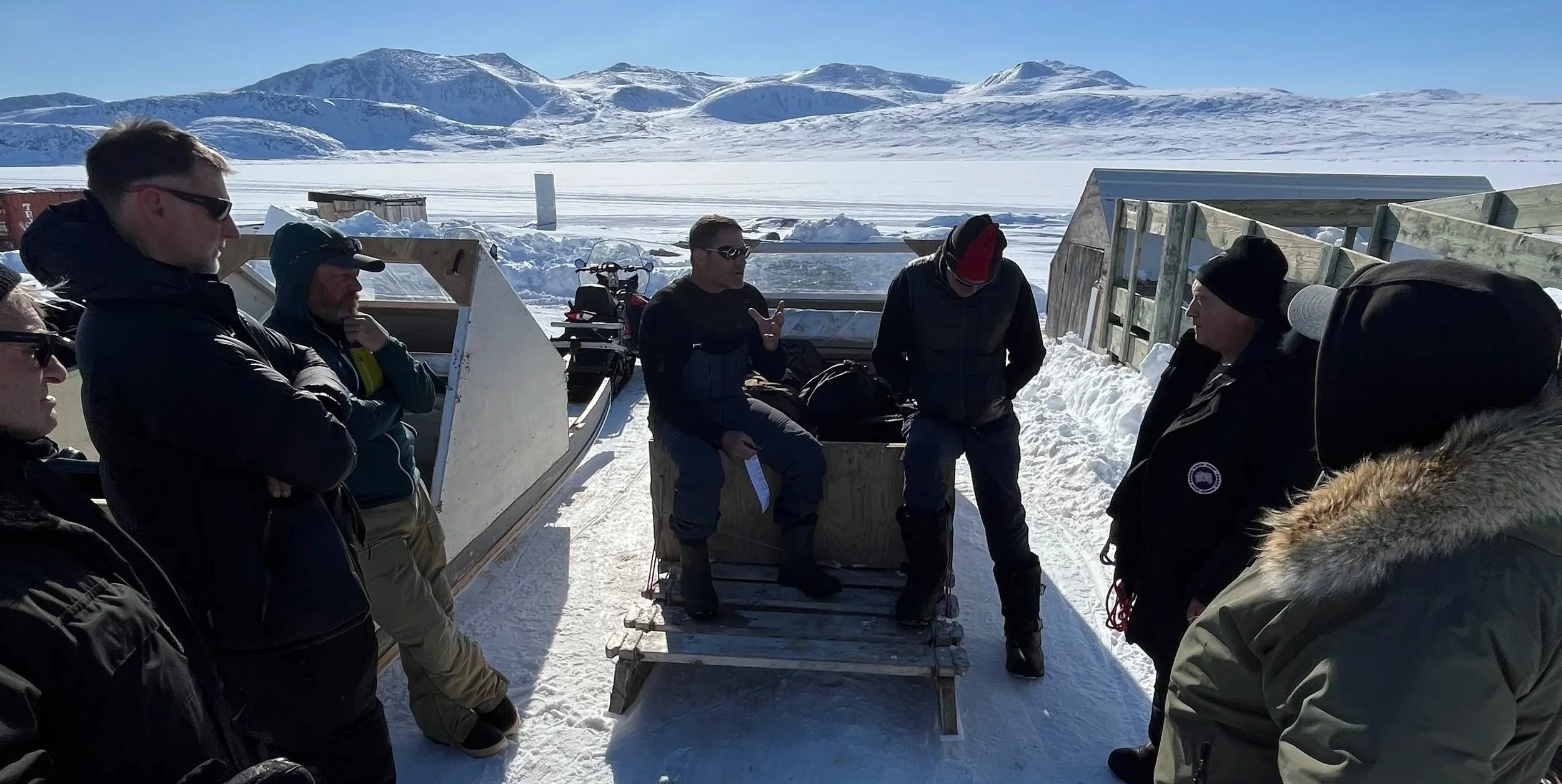
Typically when preparing for an ice dive, you want to ensure your camera kit and dive kit is squared away with a checklist and plenty of time to ensure double checks and triple checks for leaks, missing kit and more. In this situation Steve was slated to move on for another leg of the production in 48 hours, we had no choice but to jump in full speed. This was by far the fastest kit setup I’ve experienced on a project. It was also one of the first times I have ever had to build my kit from scratch due to baggage restrictions. The support team from Arctic Kingdom Expeditions rallied the sleds, snowmobiles and crew to head out from the hotel directly across the ice. Our full crew included UK producers, sound technicians, camera operators, dive specialists and the local Inuit guide Sammy Qappik.
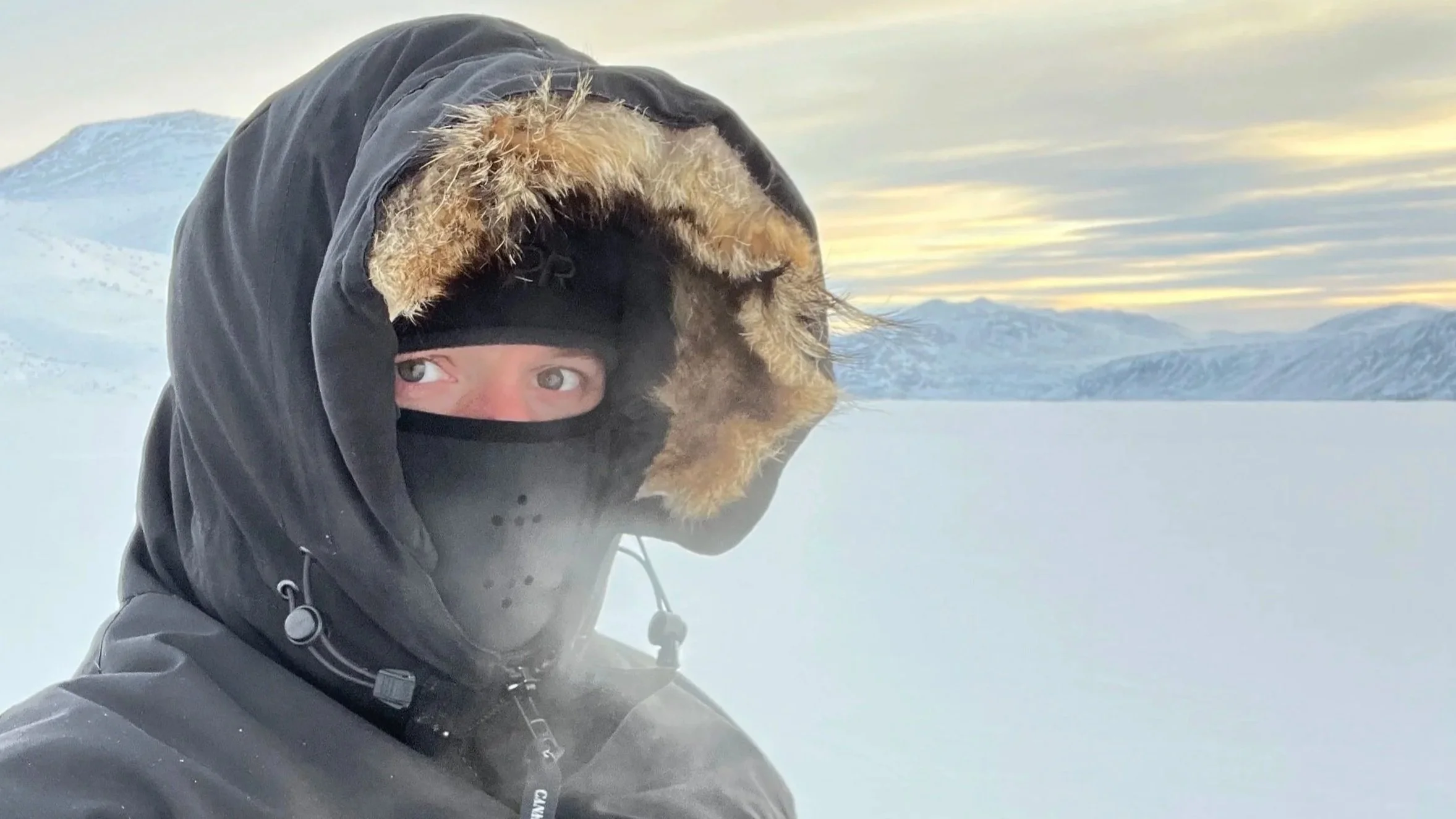
Sammy Qappik is a local clam diver in Qik and a key part of our mission. The first dive site was his latest clam diving hole, which took about an hour to reach on the Baffin Island sea ice. The snowmobiles were equipped with custom built sleds to carry the plethora of equipment we had, so our motorcade of crew must have been a head turner for the local Polar Bears on the sea ice. The Canada Goose Expedition thermals provided by the Arctic Kingdom team truly made the difference in transit, allowing us to stay as warm as possible before the dive. My face was still nearly frozen on arrival even with the face covering balaclava.
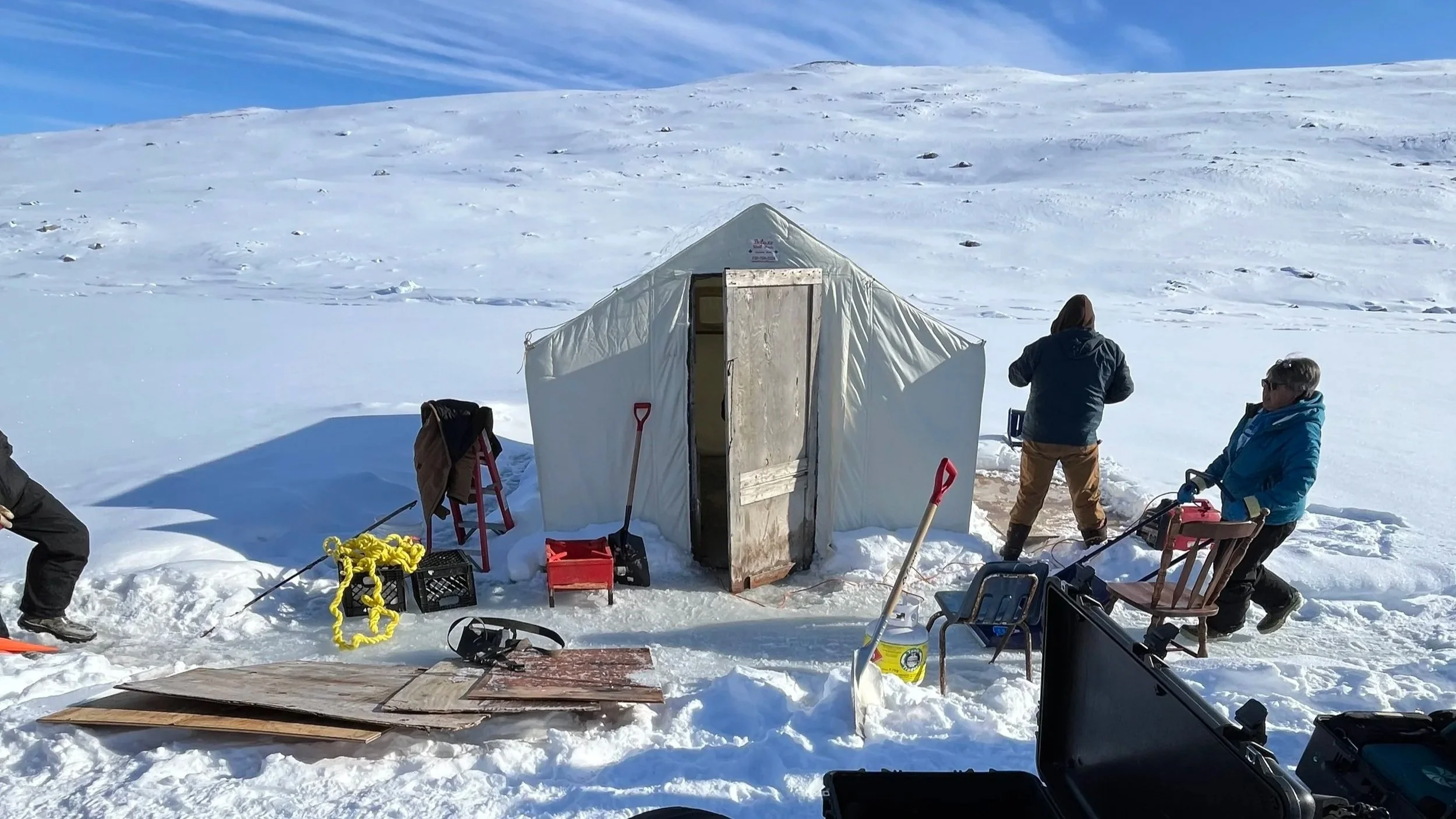
On arrival at the first dive site, the crew scattered like ants on a mission to assemble all essential equipment for the dive. Sammy’s clam hole was covered with a shack, allowing the team to heat it enough to ensure a safe warm up after the dive. Within 30 minutes the crew had accomplished what should have taken a couple hours or more. There is a real beauty to working with pros in an arena like this when time is of the essence. After a briefing and agreed safety plan, it was time to get in the hole. As our first dive kicked off, we descended into the hole into a beautiful ice world. The evening light created an alien like purple glow beneath the ice. This was enchanting as the safety divers and I descended with our lines to the sea floor. Our gameplan was to descend and wait for Steve’s entry. This is a common practice when filming a subject underwater so I can tell their story of adventure from the moment it begins.
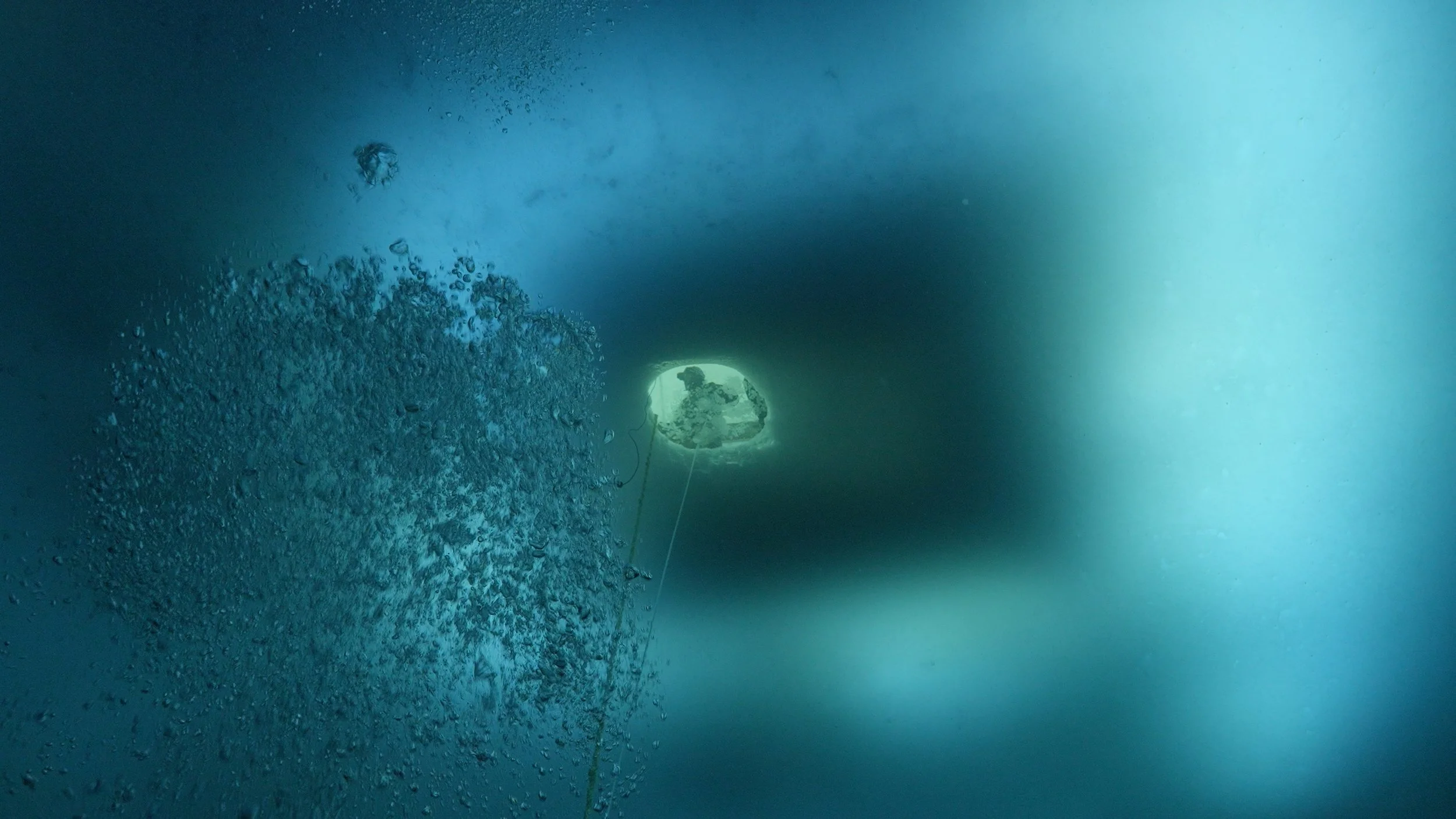
The first shot in that sequence is looking up from the sea floor at Steve’s plunge into the ice hole. For the first few moments comms are engaged and my listen only buddy phone from Ocean Technology Systems is filled with a few beeps followed by Steve’s first words underwater. Immediately following Steve, is Sammy. The core objective of this dive was to film Steve’s observations and experience as he narrates the dive alongside Sammy Qappik collecting clams from the sea floor into a mesh collection bag. The abundance of tiny life such as sea stars and anemones was astonishing. As he moved across the bottom, Sammy digged and fanned for clams. Sammy quickly filled his bag full of the healthiest and tastiest clams in the world. Steve’s excitement was bursting out of him as he looked to my camera and narrated the experience.
The cold began to creep up on us all after 45 minutes of moving along the sea floor in tandem with Sammy and Steve. The water sits around -1.8°C (28.8°F) beneath the sea ice this time of year. The first indicator it was time to ascend was the failing light as it was quickly becoming a night dive which poses new challenges we wanted to avoid. As we signalled to end the dive collectively Steve made for his controlled ascent to the ice hole. I filmed his ascent and the real work began. The things many people do not see in Hollywood is the pain and challenges crew can face against the elements or environments shows and films are made in. As crew, we often have to find our own ways of managing what many call, “The Pain Cave”.
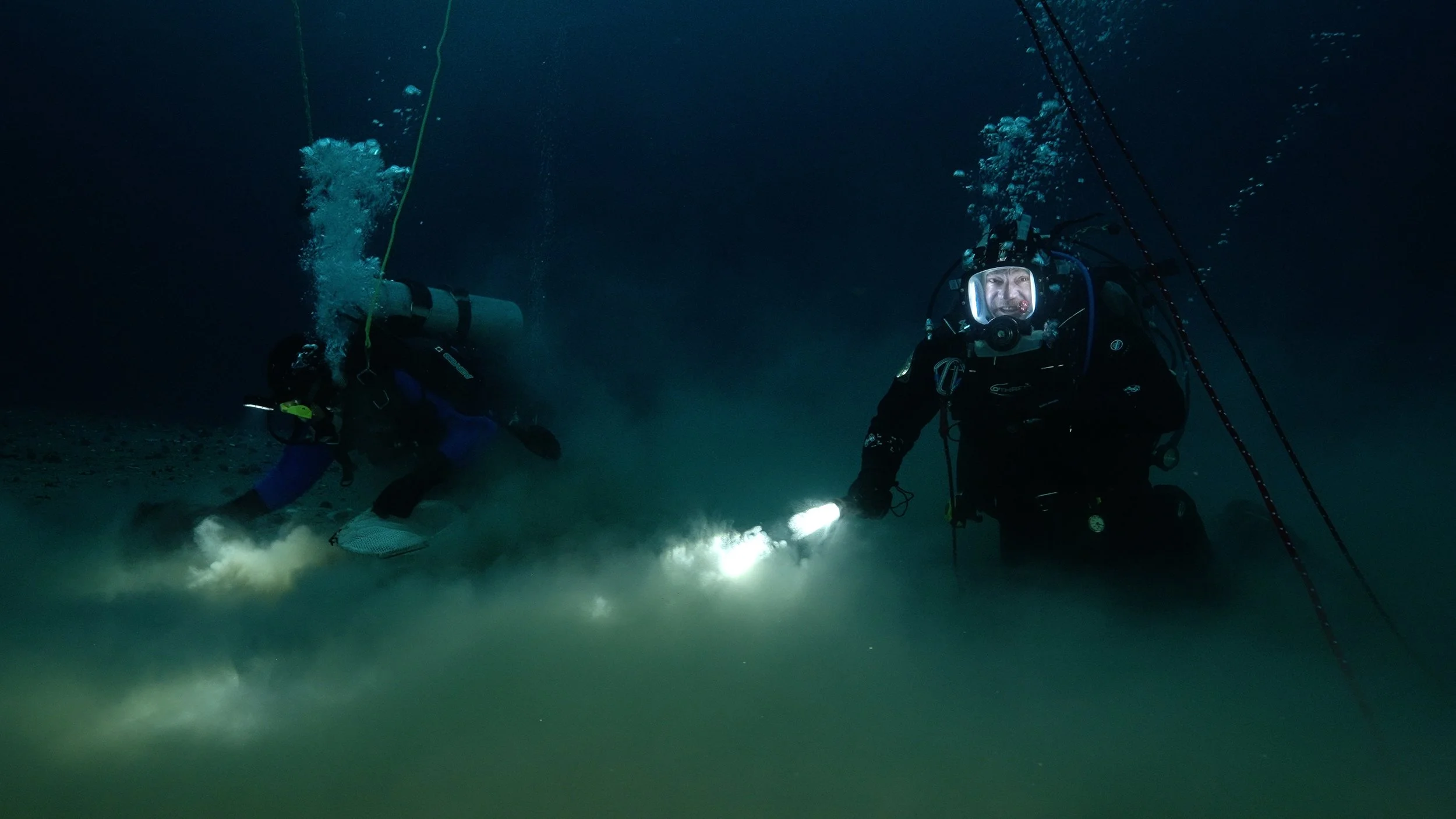
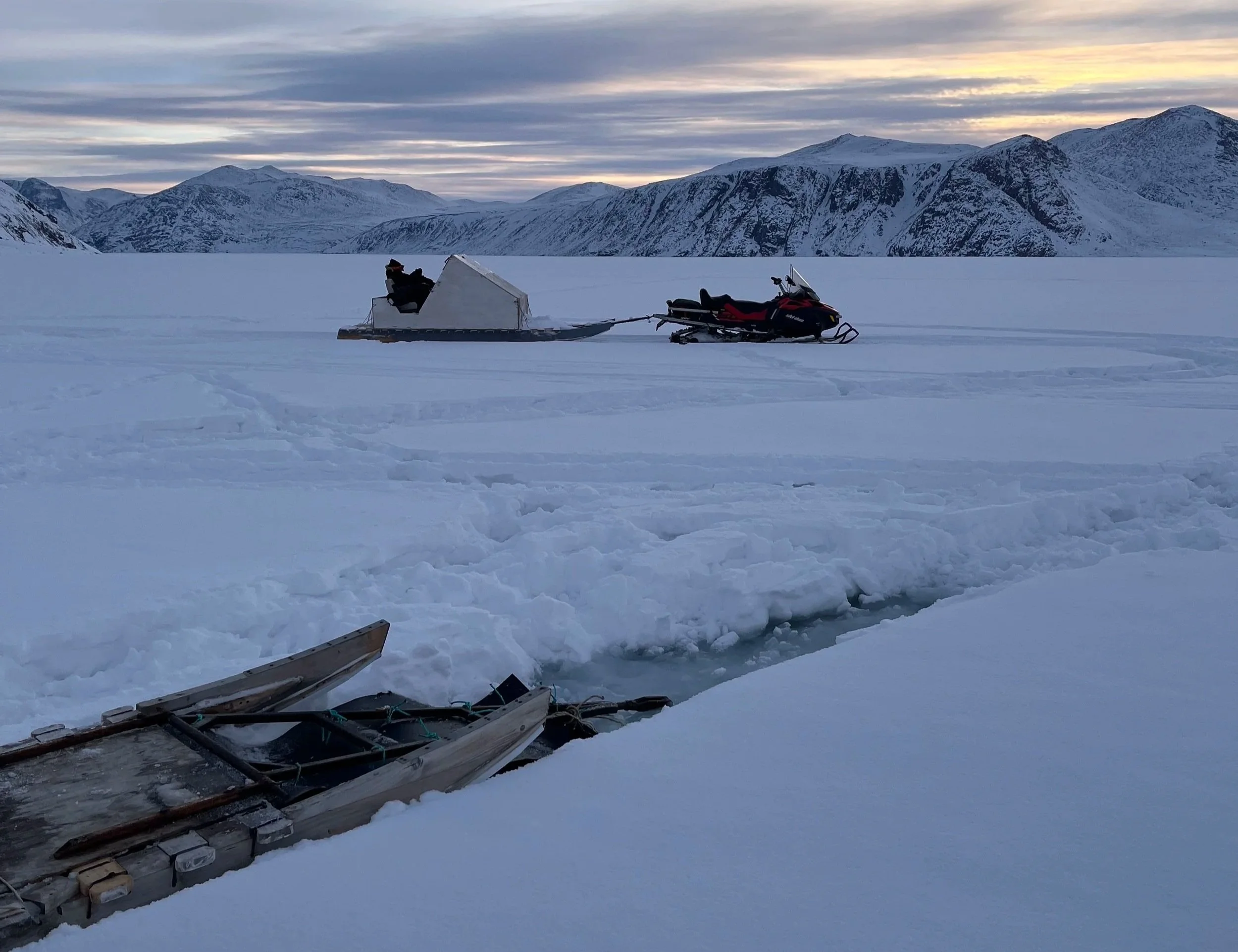
As Steve disappeared through the hole we waited for the signal that the topside film crew had finished filming Steve’s dive debrief and the remaining crew were clear to ascend and exit. This static wait quickly became excruciating with 5 finger gloves as I simply hovered, neutrally buoyant, becoming colder by the second. Many ice divers choose the lobster claw gloves to keep their hands warmer but I need maximum dexterity for button control on my underwater housing, which trades off as being incredibly cold once your body temperature drops near the end of an hour long dive beneath the ice. Thankfully we all surfaced safely through the hole in time for everyone to warm up and pack up for our long, dark journey back to the hotel. As if to remind us of why we were there to tell a story of the changing climate, we encountered ice melts that attempted to devour our snowmobile's and sleds. Thankfully with some team effort, we were eventually able to pull them loose and finish our journey home for some rest.
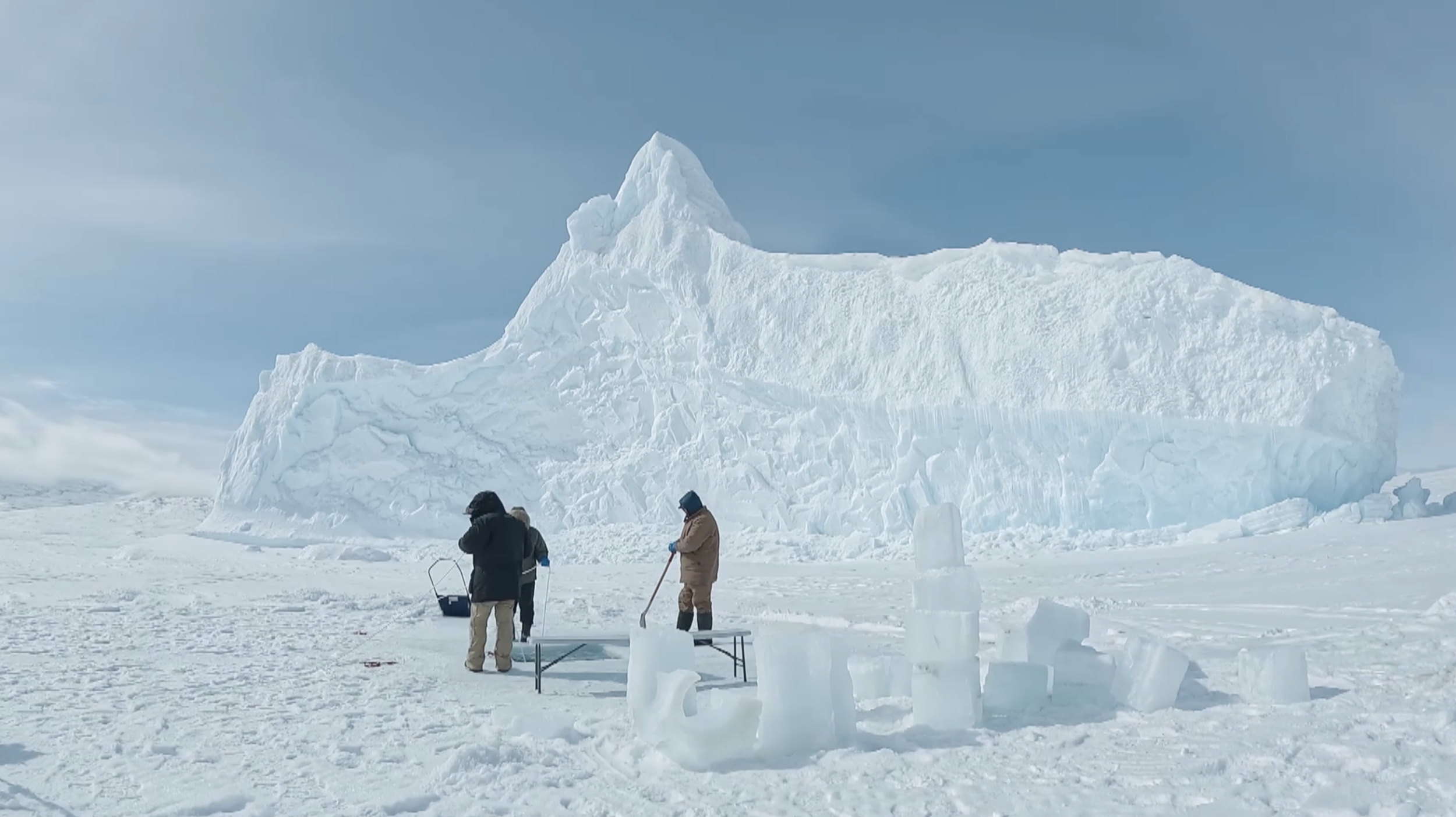
The next morning we started bright and early with an epic dive plan. After a short breakfast in the hotel and briefing we set out again as a full crew for a nearby iceberg that had run aground in about 1000 feet of water. The locals and our expedition leader determined it was our safest option for an iceberg dive in the area. The adventure began as we set out across the ice again as a full motorcade. As we spotted the iceberg from a distance it looked small and slightly underwhelming. Boy was I wrong. On arrival it left all of our crew nearly speechless. The awe of this ancient ice up close is something to behold. The tonal range of blues and even purple tones in the ice are hard to describe. The sheer size of it up close leaves you feeling humbled and cautious.
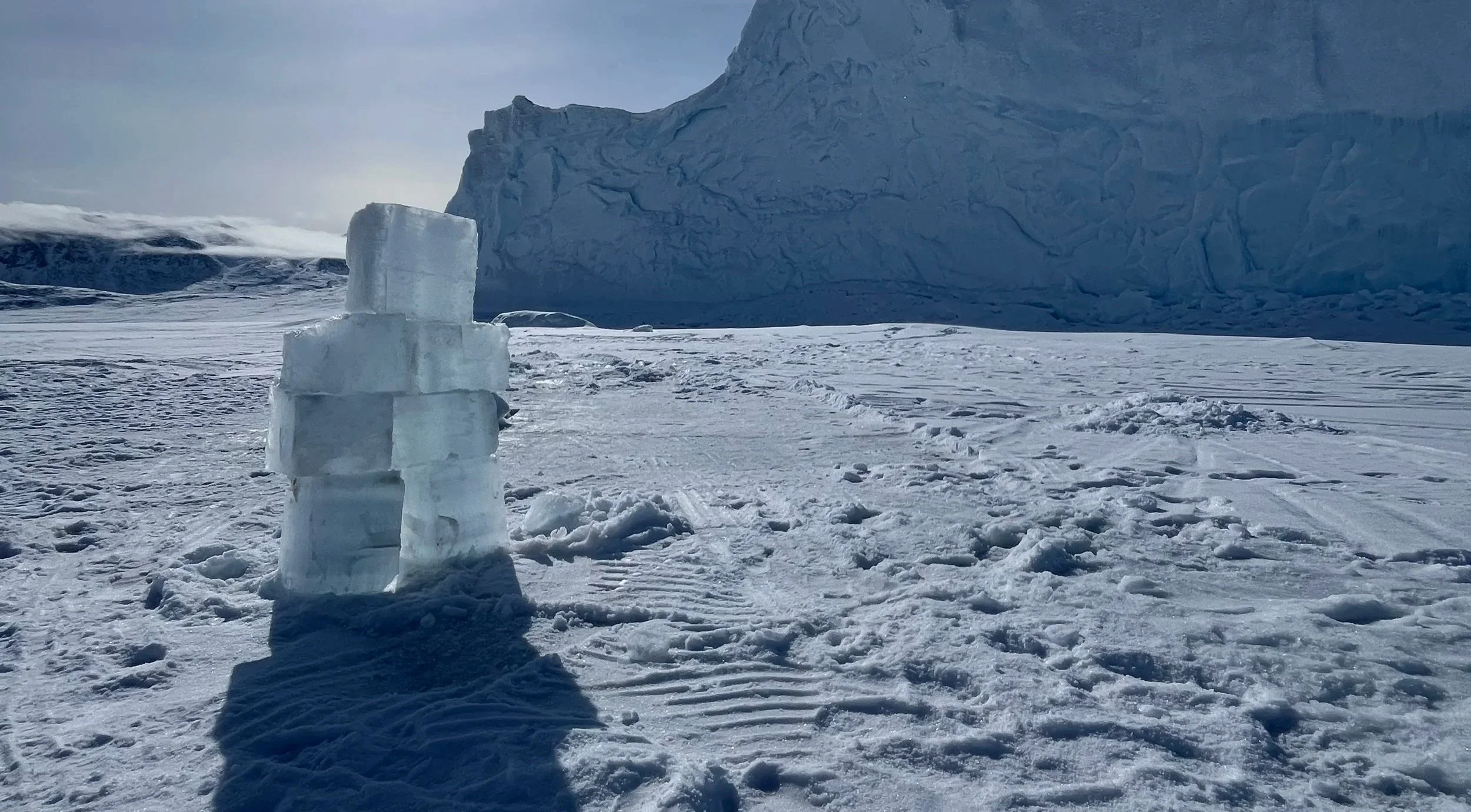
Icebergs are known to move and roll. In the event we’re beneath the ice when this occurs, we would most likely perish. This was not lost on anyone so we took every precaution imaginable. After doing a few laps around the iceberg, we identified weak points and the most logical location to cut our ice hole for the dive. We backed the hole a good distance away from the most stable wall of the iceberg. The local Inuit crew began cutting the hole which took over two hours as the ice was over a metre thick. This is done with a long bar chainsaw in cube sections. Each piece is then lifted out of the hole onto the surface ice. This give us piece of mind that the freshly cut ice will not shift underwater and freeze over our hole. The water in the hole freezes so quickly in those temperatures that the hole needs to be constantly cleaned of forming slush to maintain it’s integrity. The Inuit locals had good fun and stacked the giant ice cubes to form an Inukshuk at the dive site. They were also very kind as to cut a step down into the hole to ease our entry and exit with heavy equipment.
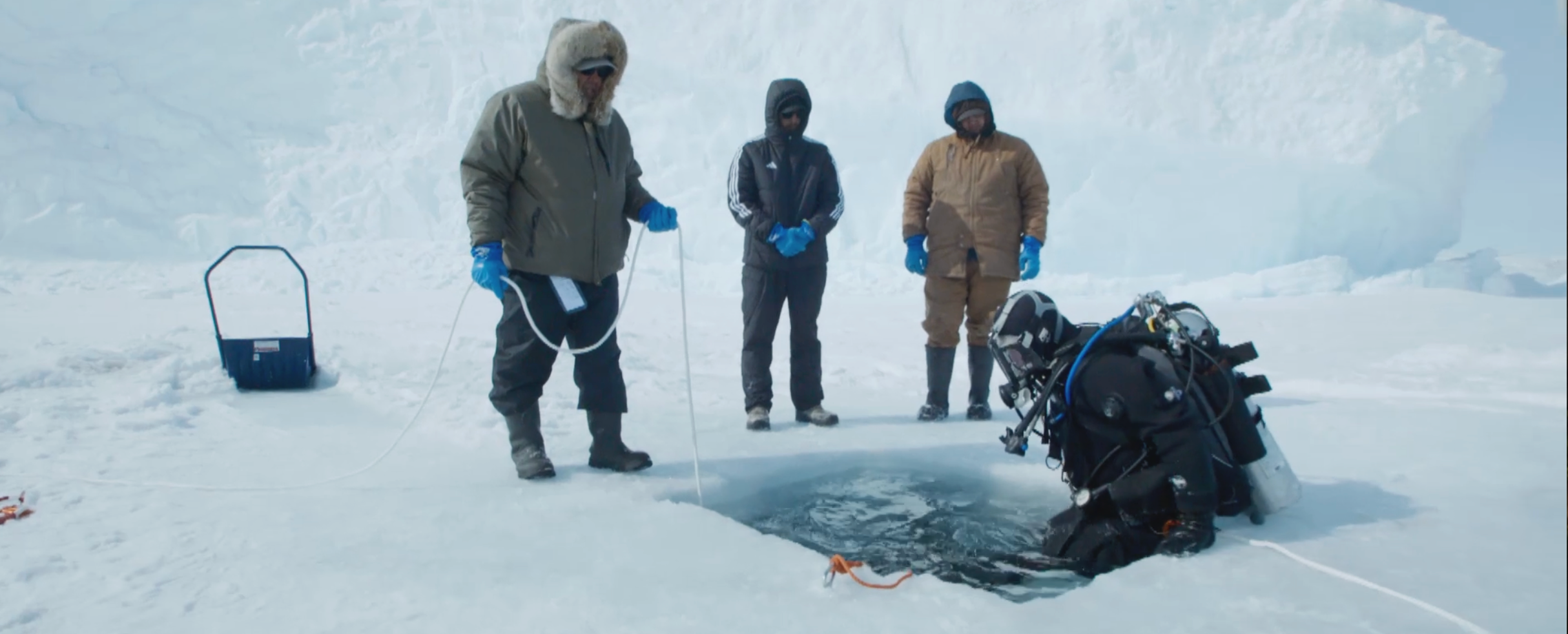
As we waited for the hole, the crew prepared equipment and our mental states for this high stakes dive. Diving beneath the ice is inherently dangerous, but with enough experience and preparation we were ready to take it on. Similar to our clam dive, Steve was last in the water and first out. As we began our iceberg dive, none of us knew what magic waited for us below. A frozen iceworld emerged in front of us. The sea stretched beneath us into what felt like an infinite deep. Ahead was the ice wall of the icerberg and surprisingly it curved outward towards us. This left me feeling like we were in the presence of a god-like entity that was inviting us for a closer look into it’s domain. Within the first 15 minutes of our dive our regulators were starting to freeze up. This is a common issue ice diving and one that can usually be avoided with the right gear and protocols. Sometimes in extreme cold, it simply happens no matter how well prepared you are. Thankfully we had hot water to thaw them out and get us back in the action.
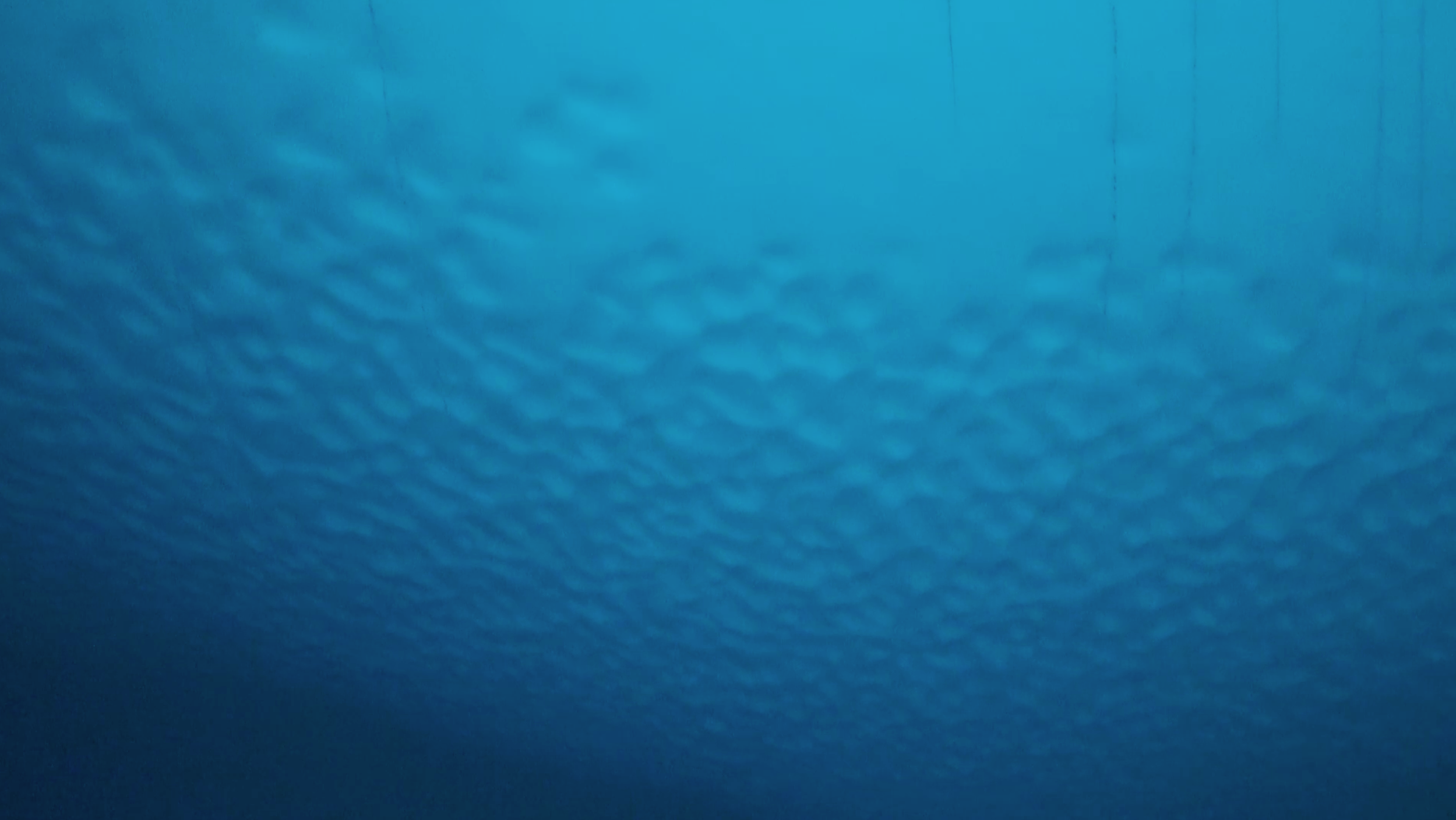
Our dive continued and we approached the berg wall. On approach, Steve stopped to investigate translucent jellies suspended in the water column. It was as if an alien was staring at another alien. The scenes were so epic I admittedly had to look past my camera housing to take it in for myself. The immensity of the ice and the scalloped markings along its outstretched wall were unlike anything I have ever seen. One caution we had to take is a constant check on our depth and buoyancy as the melt water from the berg can create sudden shifts in buoyancy on approach. This was noticeable as we got within touching distance of the ice.
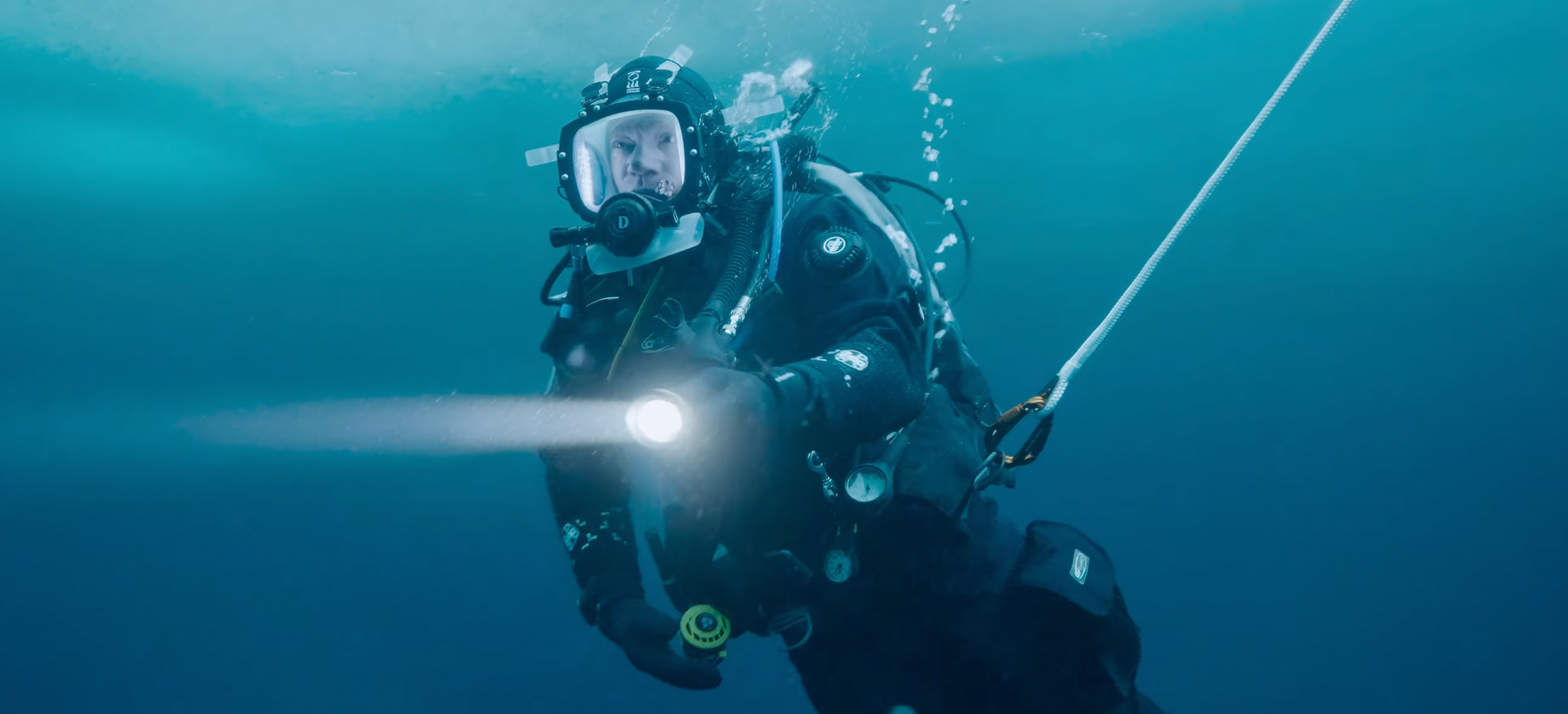
Without question, we were in the presence of an ancient being as we suspended neutrally adjacent to the berg. The feeling of sharing that space with some incredible humans will stay with me for the rest of my life. This is a sight most will never experience and that was not lost on any of us. Scuba diving is a great privilege and one that was blessed my life and my eyeballs with so many wonderful experiences and moments. To be able to film and share these places and experiences is the calling of my life. Steve eventually signalled to end the dive after we had satisfied our curiosities with the berg. We all took in our final moments with this great ice giant and ascended.
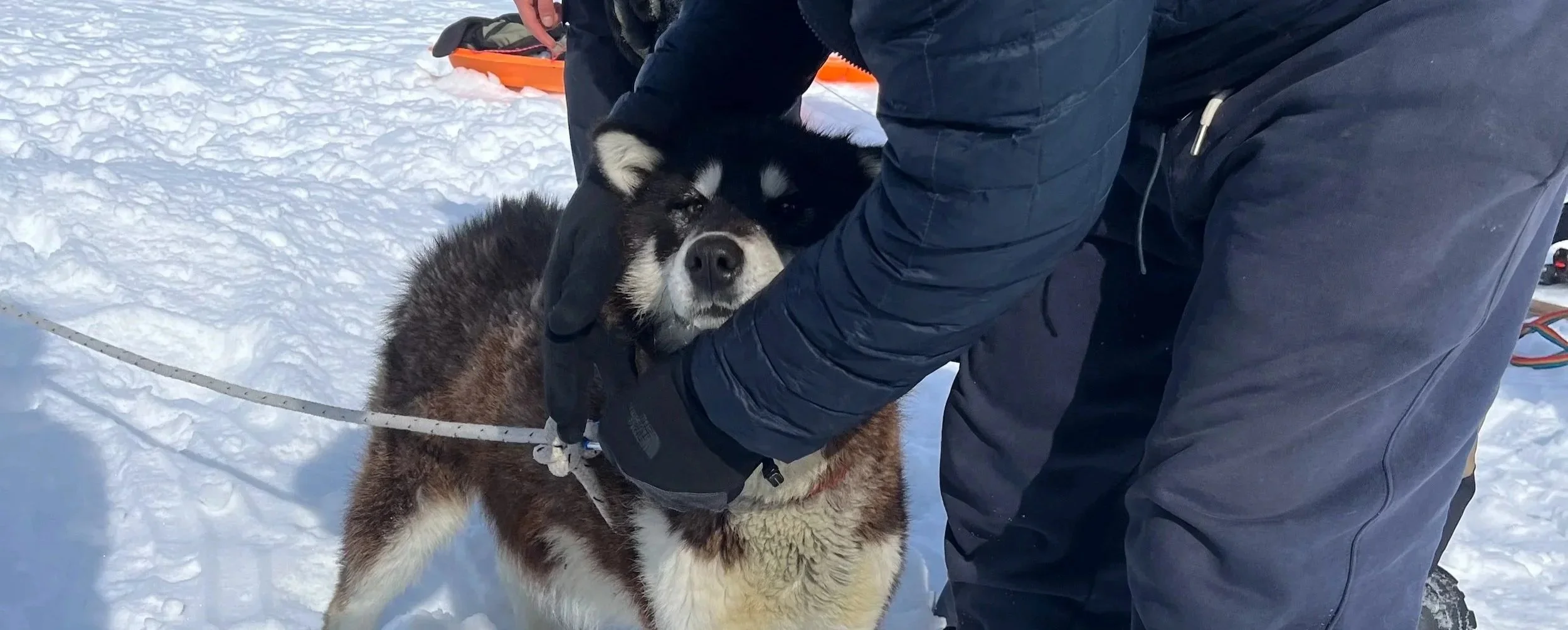
On the surface we were met with many happy and relieved faces knowing we had all returned safely and conducted a successful production. Steve begged for another dive before our departure but it was simply not in the cards for the production schedule. We enjoyed our time together as a crew, meeting locals passing by on cross country skis and even some scientists and their family who were over wintering their vessel further out to sea. This place is surreal in so many ways. The scientists were skiing with ammo belts around their shoulders for quick access should they need to fire deterrent rounds at a polar bear on the ice. They even had sled dogs to keep them company. We may have given them some proper love. There is a lot of research being done in Baffin Island to determine the rate of seasonal ice melt among other things such as ecosystem stability.
The next day we wrapped up and said our goodbyes. Our luggage collectively almost crippled the small airline. Thankfully they managed to fly our gear out in batches. We flew together as a full crew stopping over in another small community and then myself and the dive safety crew continued on to Iqaluit for home. This experience was truly one for the books.
The film, “Steve Backshall’s Royal Arctic Challenge” premiered in an IMAX theatre in the London Science Centre in England in October 2024. It can be seen streaming on ITV in the UK and hopefully it will soon be available to watch in North America. A huge thank you to the entire team at Artic Kingdom for trusting me to document Steve’s dives and to Fresh Start Media who produced this exceptional film. Films like this matter because they force us to reflect on how quickly our planet is changing. The natural world needs our help more than ever.
Thank you for reading this far and for your curiosity about my work. You can watch the trailer for the film below: